When it comes to engine components, few questions are as common among Ford owners as whether their vehicle uses a timing belt or a timing chain. Knowing whether your Ford engine uses a timing belt or chain is critical for engine reliability, performance, and avoiding costly repairs. Expert assessment and technical guidance ensure your engine operates precisely as designed, avoiding costly failures. Timing components synchronize your engine’s valves and pistons, and failure can result in severe internal damage. In this guide, we’ll explore Ford engines, explain the differences between belts and chains, and provide practical tips to identify which component your engine uses.
What are Ford Engines?
Ford has a long history of engineering engines for performance, efficiency, and durability. Over the decades, several engine families have become particularly popular:
-
Duratec Engines: Smooth and reliable, mostly in early 2000s Ford vehicles. Older models often use timing belts.
-
EcoBoost Engines: Turbocharged for efficiency and power. Modern models typically use timing chains, though pre-2018 versions sometimes have wet belts, which can wear faster if oil quality is poor.
-
Triton V6/V8 Engines: Built for heavy-duty trucks and SUVs. Use timing chains for durability. Chains may rattle slightly when tensioners wear — a sign that inspection is needed.
-
Modular V8 Engines: High-performance engines in luxury and performance models. Use chains with guides and tensioners to ensure precise timing.
Understanding your engine type is the first step in determining the maintenance requirements for your Ford vehicle.
Timing Belts vs. Timing Chains in Ford Engines
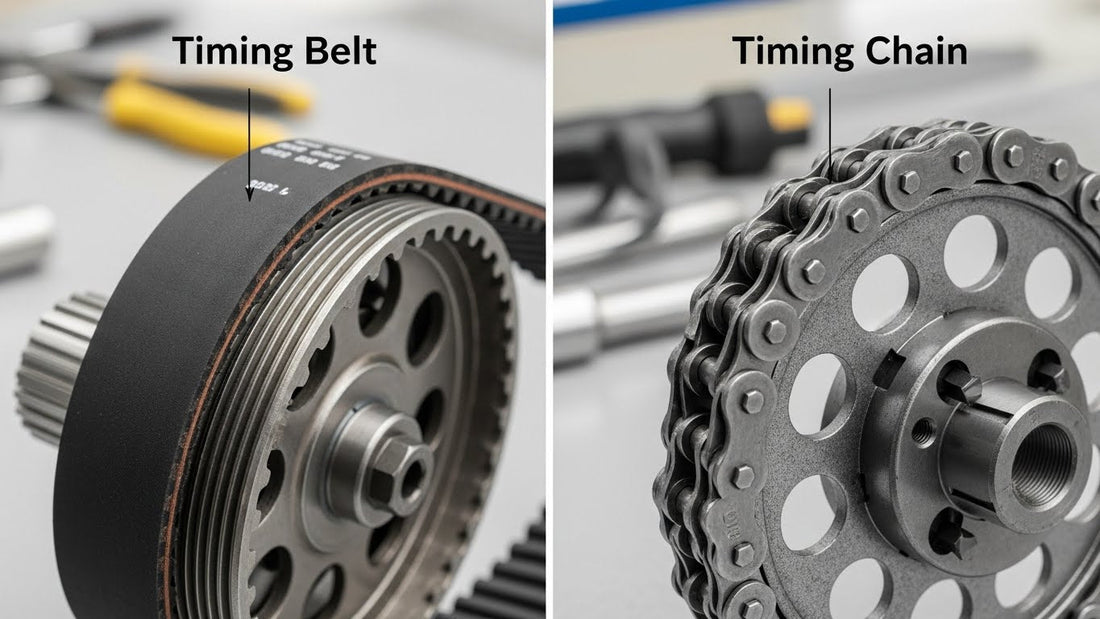
 Timing belts and chains serve the same function — synchronising the camshaft and crankshaft — but they differ in design, durability, and maintenance.
|
Feature / Aspect |
Timing Belts |
Timing Chains |
|
Material & Design |
Rubber reinforced with fibers; keeps camshaft and crankshaft in sync |
Metal chain; built for longevity while performing the same function |
|
Common in Ford Engines |
Older Duratec models and certain older engines |
Most modern EcoBoost and Triton engines |
|
Replacement / Maintenance |
Requires scheduled replacement, typically every 60,000–100,000 miles |
Usually maintenance-free; tensioners and guides may wear over time |
|
Durability |
Prone to wear; failure can cause severe engine damage |
Highly durable; can last the life of the engine, though tensioners may fail |
|
Performance & Noise |
Quieter and lighter; can slightly improve fuel efficiency |
Very durable but can become noisy if not properly lubricated or if tensioners wear |
|
Cost Consideration |
Lower replacement cost, but failure can lead to expensive repairs |
Higher replacement cost if needed, but long-term reliability reduces risk |
Timing chains are favoured in modern engines for their durability and precision, and Approved Engines’ specialists ensure these components are assessed and fitted correctly for maximum reliability
Belts are quieter and lighter, which can improve fuel efficiency slightly, but require scheduled replacement to prevent severe engine damage.
Ford Engine Families: Belt or Chain?
Ford engines can use either timing belts or timing chains, with the choice depending on the specific engine family and model year. Many EcoBoost engines historically used “wet belts” (oil-immersed timing belts), but some newer models have switched to more durable timing chains in recent years. Older V8 and V10 engines generally use timing chains, while some smaller petrol engines, such as older Fiesta or Focus models, might use dry belts.
Timing Chains
Used in: Many modern EcoBoost engines (2018+), older V8 and V10 engines, Triton engines, Modular V8 engines, and many diesel engines.
Characteristics: Chains are generally more durable than belts and require less maintenance. They can often last the life of the engine, though tensioners and guides may need occasional inspection. Chains are favoured in modern Ford engines for their reliability and longevity.
Timing Belts
Used in: Some older smaller petrol engines (e.g., 1.25L and 1.4L Fiestas) and certain earlier EcoBoost models (pre-2018).
Characteristics:
-
Dry belt: A traditional timing belt not submerged in oil; requires regular replacement (usually 60,000–100,000 miles) to prevent engine damage.
-
Wet belt: An oil-immersed timing belt used in some EcoBoost engines; can be prone to premature failure due to oil degradation and heat, so monitoring and timely replacement are essential.
Determine Whether Your Ford Engine Uses a Belt or Chain
Identifying whether your Ford engine uses a timing belt or a timing chain is crucial for proper maintenance and avoiding costly engine damage.
The easiest way to confirm is by checking your vehicle documentation. Your owner’s manual or official maintenance schedule will specify the timing component used in your specific engine model and provide recommended replacement or inspection intervals.
If you’re unsure or don’t have access to the documentation, contacting a Ford dealership or authorised service centre is another reliable option. By providing your car’s VIN, a dealer can quickly tell you whether your engine is equipped with a belt or a chain, along with any relevant maintenance guidelines or updates from the manufacturer.
For those comfortable with a hands-on approach, a visual inspection can sometimes reveal the type of timing component. Timing chains are typically located inside the engine and are lubricated by engine oil, making them less visible, while belts are generally dry and often positioned on the outside of the engine for easier access.
Knowing which system your engine uses allows you to plan preventive maintenance accurately, avoid unexpected breakdowns, and extend the lifespan of your engine. Regular checks, timely replacements, and professional guidance are key to keeping your Ford running smoothly. Approved Engines’ experienced team can help ensure your engine operates efficiently and avoids costly repairs.
Final Thoughts
Understanding whether your Ford engine uses a timing belt or chain is essential for ensuring long-term reliability and optimal performance. While older Duratec engines typically rely on belts, most modern Ford engines, including EcoBoost and Triton models, are equipped with chains designed for durability and precision. Professional consultation with Approved Engines, experts in reconditioned and remanufactured engines, can save time and prevent costly mistakes.
FAQ’s
How do I know if my Ford engine has a belt or chain?
Check your owner’s manual, contact a Ford dealer, or inspect the engine if possible. Knowing the engine type can save you costly repairs
How often should a Duratec timing belt be replaced?
Older Duratec engines with belts typically require replacement every 60,000 to 100,000 miles. Always follow the manufacturer’s recommendations.
Are EcoBoost timing chains truly maintenance-free?
They are designed for long-term durability, but tensioners and guides may need attention over time. Regular oil changes help maintain their condition.
What happens if a timing chain fails in a Ford engine?
A failing chain can lead to engine misalignment, poor performance, rattling noises, and in extreme cases, severe internal damage. Immediate inspection is critical.
Can older Ford engines with belts be upgraded to chains?
This is generally not feasible due to engine design differences. Replacing a belt with a chain requires significant modifications and is rarely recommended.