An MOT test is an important legal requirement for most vehicles once they reach the relevant age. But what exactly does an MOT check, how should you prepare, and what happens if your vehicle fails?
An MOT checks important parts of your vehicle to determine whether they meet the required road safety and environmental standards at the time of the test.
It is not the same as having your vehicle serviced, and passing an MOT does not guarantee that your car is mechanically fault-free.
This guide explains what happens during an MOT, what is checked, how to prepare your vehicle, what the different MOT defect categories mean and what happens if your vehicle fails.
What Is an MOT Test?
MOT stands for Ministry of Transport test.
For most cars, the first MOT is required by the third anniversary of the vehicle's registration, followed by another MOT each year.
There are exceptions depending on the type and age of the vehicle, so you should check the official government requirements if you are unsure whether your vehicle needs an MOT.
The test assesses whether important components meet the minimum legal standards required at the time they are inspected.
What Is Checked During an MOT Test?
An MOT covers a wide range of safety and environmental items.
Depending on the vehicle, the inspection includes areas such as:
-
Registration plates and Vehicle Identification Number (VIN)
-
Lights and reflectors
-
Electrical equipment and wiring
-
Steering
-
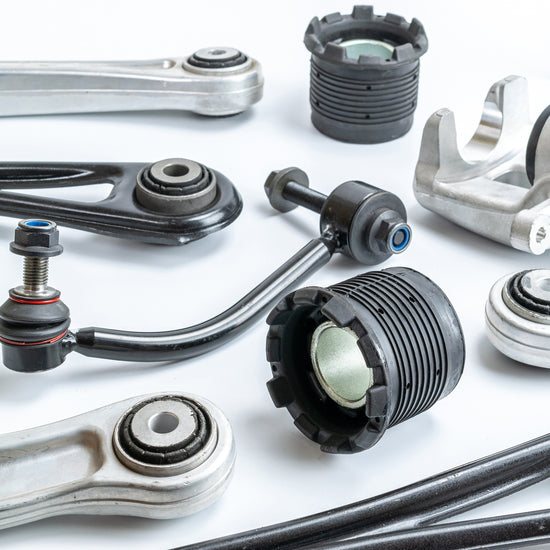
Suspension
-
Brakes
-
Wheels and tyres
-
Seat belts
-
Seats
-
Vehicle body and structure
-
Doors
-
Mirrors
-
Windscreen
-
Wipers and washers
-
Horn
-
Fuel system
-
Exhaust system
-
Exhaust emissions
-
Speedometer
-
Other applicable safety components
The precise checks depend on the age, type and specification of the vehicle.
Are Tyres Checked During an MOT?
Yes.
Tyres are an important part of the MOT inspection.
The tester checks applicable requirements including tyre condition and tread depth.
For most cars, the legal minimum tread depth is 1.6mm across the central three-quarters of the breadth of the tyre and around its entire circumference.
Tyres can also cause problems if they are damaged or otherwise fail to meet MOT requirements.
Before your MOT, visually inspect your tyres for:
-
Low tread
-
Cuts
-
Bulges
-
Other obvious damage
If you need help with your tyres, Approved Engines also provides new tyre and tyre repair services.
Are Brakes Checked During an MOT?
Yes.
The braking system is a major part of the MOT.
The test covers applicable brake components and operation, including braking performance.
Depending on the vehicle and equipment fitted, relevant warning systems can also form part of the inspection.
If your brakes are making unusual noises, the vehicle pulls when braking or a brake warning light is displayed, don't wait for the MOT before having the problem investigated.
Are Lights Checked During an MOT?
Yes.
Applicable lamps are inspected for factors such as condition, operation and other MOT requirements.
Depending on the vehicle, this can include:
-
Headlamps
-
Brake lights
-
Indicators
-
Rear lights
-
Registration plate lights
-
Fog lamps
-
Reversing lamps
-
Daytime running lamps
The requirements vary according to factors such as the vehicle's age and specification.
Checking your lights before your appointment is one of the easiest MOT preparation tasks you can do at home.
Are Exhaust and Emissions Checked?
The exhaust system and applicable emissions requirements form part of the MOT inspection.
The exact emissions test depends on factors including the vehicle's fuel type, age and specification.
Relevant aspects of the exhaust system are also inspected.
Diesel vehicles may be subject to checks relating to the diesel particulate filter (DPF) where applicable.
Is the Engine Checked During an MOT?
This is an important distinction.
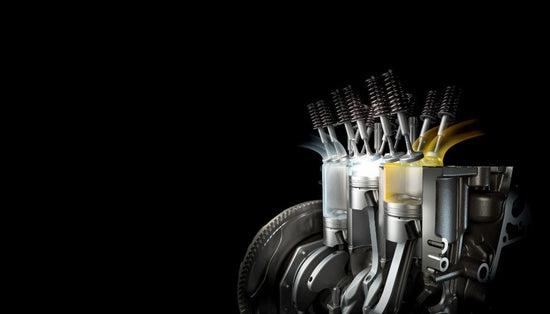
The MOT does not test the mechanical condition of the engine itself.
The condition of the clutch and gearbox is also outside the scope of the MOT test.
However, items associated with the vehicle that affect MOT requirements such as exhaust emissions can still be tested.
This is one reason an MOT should not be confused with a vehicle service.
MOT Test vs Car Service: What's the Difference?
An MOT and a service perform different jobs.
An MOT is a legally defined inspection of specified vehicle components against minimum road safety and environmental standards.
A vehicle service is maintenance intended to help keep the vehicle operating correctly and identify wear or mechanical problems.
For example, an MOT does not assess the mechanical condition of your:
-
Engine
-
Clutch
-
Gearbox
A car can therefore pass its MOT and still require mechanical maintenance or repairs.
Likewise, having your vehicle serviced does not replace its MOT requirement.
How Long Does an MOT Test Take?
An MOT will commonly take around 45 minutes to an hour, although the actual time can vary.
Additional time may be required if faults are identified and you ask the garage to carry out repairs.
When booking your MOT, ask the test centre about appointment arrangements if you need your vehicle back by a particular time.
How Should I Prepare My Car for an MOT?
A few simple checks before your appointment can identify obvious problems.
MOT Pre-Test Checklist
Before taking your vehicle for its MOT:
-
Check that your lights work
-
Check your indicators
-
Inspect your tyres for tread and visible damage
-
Check your windscreen for obvious damage
-
Make sure the wipers clear the windscreen effectively
-
Top up the windscreen washer fluid
-
Test the horn
-
Check that mirrors are secure and usable
-
Check your registration plates are secure and clearly readable
-
Make sure seat belts operate correctly
-
Remove unnecessary items that could obstruct inspection
These checks cannot guarantee an MOT pass, but they can help you identify straightforward problems before the test.
Do I Need to Clean My Car Before an MOT?
Your vehicle does not need to be professionally valeted before an MOT.
However, the tester must be able to inspect the vehicle properly.
It makes sense to remove excessive clutter or anything that could prevent access to areas that need inspecting.
Registration plates, lights, mirrors and windows should also be sufficiently clean to be clearly visible and usable.
What Documents Do I Need for an MOT?
For a routine MOT, you generally do not need to bring your previous MOT certificate.
There are situations where the vehicle's V5C registration certificate (log book) may be required, including the vehicle's first MOT or the first test following certain registration changes.
If you're uncertain, ask the MOT test centre when booking.
What Do MOT Defect Categories Mean?
Following the test, faults can be recorded in different categories.
Understanding these terms makes the MOT result much easier to interpret.
Dangerous Defect
A dangerous defect represents a direct and immediate risk to road safety or has a serious environmental impact.
A vehicle with a dangerous defect fails its MOT.
Major Defect
A major defect may affect the safety of the vehicle, put other road users at risk or have an environmental impact.
A major defect also results in an MOT failure.
Minor Defect
A minor defect has no significant effect on the safety of the vehicle or impact on the environment.
It should be repaired as soon as possible, but a minor defect by itself does not result in an MOT failure.
Advisory
The tester can also record an advisory for something that could become more serious in the future.
Advisories are useful because they highlight items you may need to monitor or repair before they deteriorate further.
What Happens If My Car Fails Its MOT?
If your vehicle fails, you will receive an MOT test result showing the defects that caused the failure.
Those problems need to be addressed before the vehicle can pass.
One important point is that an MOT failure does not always mean the same thing for whether you can legally drive the vehicle away.
Whether you can drive after a failure depends on factors including whether your previous MOT is still valid and whether the vehicle has a dangerous defect.
The vehicle must remain roadworthy whenever it is driven.
If you're uncertain, ask the MOT test centre before driving away.
Can I Drive If My MOT Has Expired?
Generally, you cannot drive or park a vehicle on the road once its MOT has expired if it is required to have a valid MOT.
There are limited exceptions, including driving to a pre-arranged MOT test or, in qualifying circumstances, to or from repairs required following a failed test.
The vehicle must still be roadworthy.
Driving an unroadworthy vehicle can be an offence regardless of whether you are travelling to an MOT appointment.
How Often Do I Need an MOT?
For most cars that require an MOT, the first test is due by the third anniversary of registration.
After that, an MOT is normally required every year.
Your MOT certificate shows when the current MOT expires.
You can also check your vehicle's MOT status and history through the official GOV.UK service.
Can I Get an MOT Before the Expiry Date?
Yes.
You do not have to wait until the exact expiry date to arrange your next MOT.
If you have the test up to one month minus one day before the current MOT expires, you can generally keep the same renewal date for the following year.
Having it earlier than this can change the renewal date.
This can be useful if you want time to deal with any repairs before the existing MOT expires.
What Are Common Reasons for MOT Failure?
Vehicles can fail for many different reasons, but problems are often found in areas such as:
-
Lights and electrical equipment
-
Tyres and wheels
-
Suspension
-
Brakes
-
Windscreen visibility
-
Wipers and washers
-
Exhaust and emissions
-
Registration plates
Some of these faults are difficult to identify without professional inspection, but others—such as a failed bulb or damaged wiper may be noticeable before the appointment.
For a more detailed breakdown, read our guide to the most common reasons cars fail an MOT.
Does an MOT Guarantee My Car Is Safe for a Year?
No.
An MOT confirms that the applicable components met the required standards at the time of the test.
It is not a guarantee that the vehicle will remain roadworthy until the next MOT.
Tyres can wear, bulbs can fail, brakes can deteriorate and mechanical problems can develop at any time.
Drivers remain responsible for keeping their vehicles roadworthy between MOT tests.
Does Passing an MOT Mean My Car Doesn't Need a Service?
No.
Passing an MOT does not mean that your vehicle is fully serviced or mechanically fault-free.
An MOT and servicing have different purposes.
Your vehicle should still be maintained according to the manufacturer's recommended schedule and any mechanical problems should be investigated when they occur.
Why Choose Approved Engines for Your MOT?
Approved Engines provides professional MOT testing alongside vehicle repair and maintenance services.
Having access to garage services as well as MOT testing can be particularly convenient if the test identifies an issue requiring attention.
Our services include:
-
MOT testing
-
Vehicle servicing and repairs
-
Tyres and tyre repairs
-
Engine diagnostics
-
Engine repairs
-
Other specialist engine services
For information about service availability in your area, visit our Areas We Cover page.
Frequently Asked Questions About MOT Tests
What does MOT stand for?
MOT stands for Ministry of Transport. The name originates from the government department associated with the test when it was introduced.
What is checked during an MOT?
An MOT covers specified safety and environmental items including brakes, steering, suspension, tyres, lights, seat belts, visibility, vehicle structure, exhaust systems and emissions where applicable.
Is the engine checked during an MOT?
The mechanical condition of the engine itself is not tested as part of an MOT. The clutch and gearbox are also outside the scope of the test. However, applicable exhaust emissions are tested.
How long does an MOT take?
An MOT commonly takes around 45 minutes to an hour, although times can vary depending on the vehicle and test centre arrangements.
How often does a car need an MOT?
Most cars that require an MOT have their first test by the third anniversary of registration and then need to be tested annually.
How early can I get an MOT?
You can have an MOT at any time. If you have it up to one month minus one day before the current certificate expires, you can normally retain the existing annual renewal date.
Can I drive after failing an MOT?
It depends on the circumstances. If your existing MOT is still valid and no dangerous defect has been identified, you may be able to drive the vehicle, provided it remains roadworthy. Different rules apply where the existing MOT has expired or a dangerous defect has been recorded.
Can I drive to an MOT without a valid MOT certificate?
There is an exception allowing you to drive to a pre-arranged MOT test when your MOT has expired, but the vehicle must still be roadworthy.
What happens if my car has a major MOT defect?
A major defect results in an MOT failure and needs to be repaired. Whether the vehicle can be driven away depends on the circumstances, including the validity of the existing MOT and whether the vehicle remains roadworthy.
Does a minor defect fail an MOT?
No. A minor defect does not by itself cause an MOT failure, but the problem should be repaired as soon as possible.
What is an MOT advisory?
An advisory identifies an item that is not currently serious enough to fail the MOT but may need attention in the future. It is sensible to monitor and address advisories before they develop into more serious problems.
Is an MOT the same as a service?
No. An MOT checks specified items against legal road safety and environmental standards. A service involves vehicle maintenance and checks intended to keep the vehicle operating correctly. Many vehicles need both.
How much can an MOT test cost?
The government sets maximum MOT test fees according to vehicle class. Test centres can charge less than the maximum. Check the current price when booking your MOT.
Does an MOT check the spare tyre?
A spare tyre that is not currently fitted to the vehicle is not normally part of the standard tyre inspection. The tyres fitted to the vehicle must meet the applicable MOT requirements.
Where can I book an MOT with Approved Engines?
You can learn more and arrange your test through our MOT Test Centre. You can also check our Areas We Cover for service-area information.
Book Your MOT Test
If your MOT is approaching its expiry date, booking ahead gives you time to prepare your vehicle and deal with any problems that may be identified.
Remember that an MOT is a minimum road safety and environmental standards test—not a substitute for regular servicing and maintenance.
Before your appointment, check straightforward items such as your lights, tyres, wipers, washers and registration plates.
Then let an authorised MOT tester carry out the full inspection.
Book your MOT with Approved Engines, or contact our team if you have questions before your test.
For service-area information, see Areas We Cover.